
What You Need to Know About Skin Cancer
Australia has one of the highest rates of skin cancer in the world. Understanding the risks, the types and the warning signs is the first step to protecting yourself and your family.
Skin Cancer in Australia
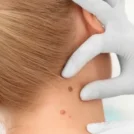
Skin cancer is the most common form of cancer in Australia, affecting people of all ages. In South Australia alone, the lifetime risk is 1 in 33 for men and 1 in 36 for women — making regular skin checks not just recommended, but essential.
Skin cancer begins in the basal layer of the epidermis and develops when skin cells are damaged — most commonly by UV radiation from the sun. Early detection dramatically improves treatment outcomes and in most cases leads to a complete cure.
Most common cancer in Australia across all age groups
1 in 33 SA men affected by skin cancer in their lifetime
1 in 36 SA women affected by skin cancer in their lifetime
Types of Skin Cancer
While there are several forms of skin cancer, three account for the vast majority of cases in Australia. Each type differs in severity and behaviour — but all are treatable when caught early.
1
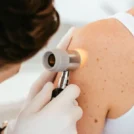
Basal Cell Carcinoma (BCC)
The most common and least aggressive form of skin cancer. BCCs develop from epidermal cells and rarely spread to other parts of the body.
2
Squamous Cell Carcinoma (SCC)
The second most common type, also developing from epidermal cells. SCCs can grow more quickly than BCCs and carry a small risk of spreading if left untreated.
3
Melanoma
The most serious form of skin cancer, melanoma begins in the pigment-producing cells (melanocytes). While less common than BCC and SCC, melanoma can spread rapidly to other organs if not caught early.
Warning Signs
Know What to Look For
The earlier skin cancer is caught, the easier it is to treat. Get to know your skin — and that of your family — so you notice any changes when they occur.
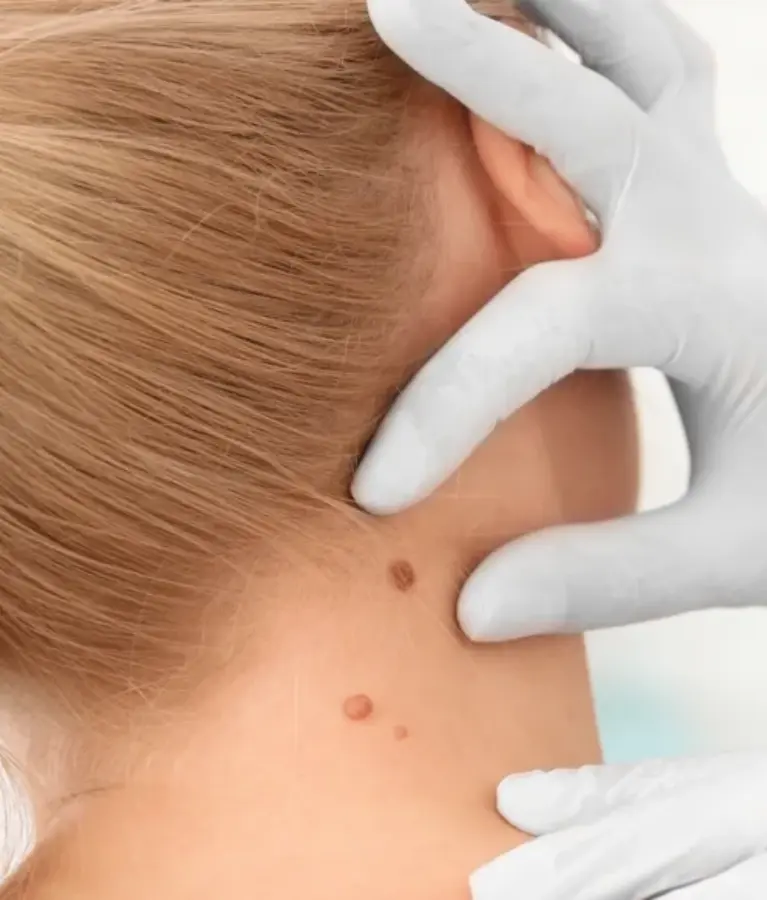
See a doctor if you notice any change in:
- Size — a spot, mole or freckle that is growing
- Shape — irregular, uneven or asymmetrical borders
- Colour — multiple colours or an unusual shade
- Texture — a rough, scaly or raised surface
- Behaviour — a sore that bleeds, itches or won’t heal
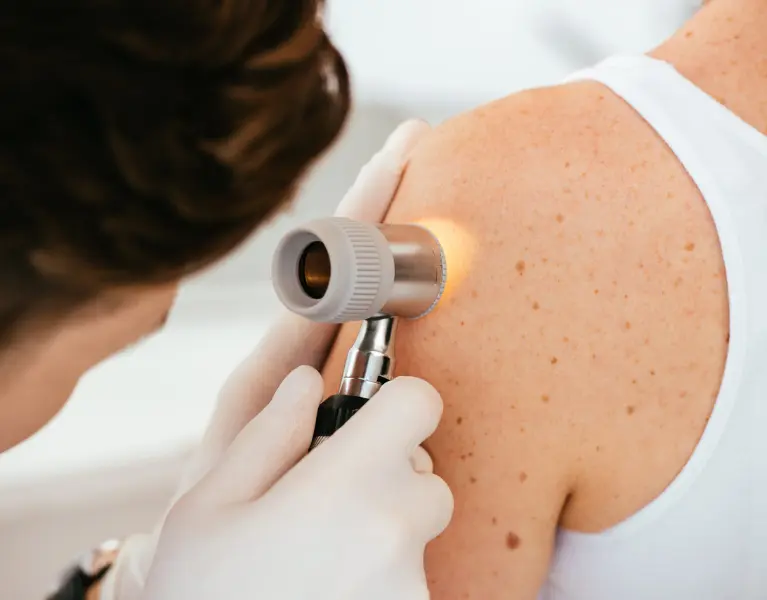
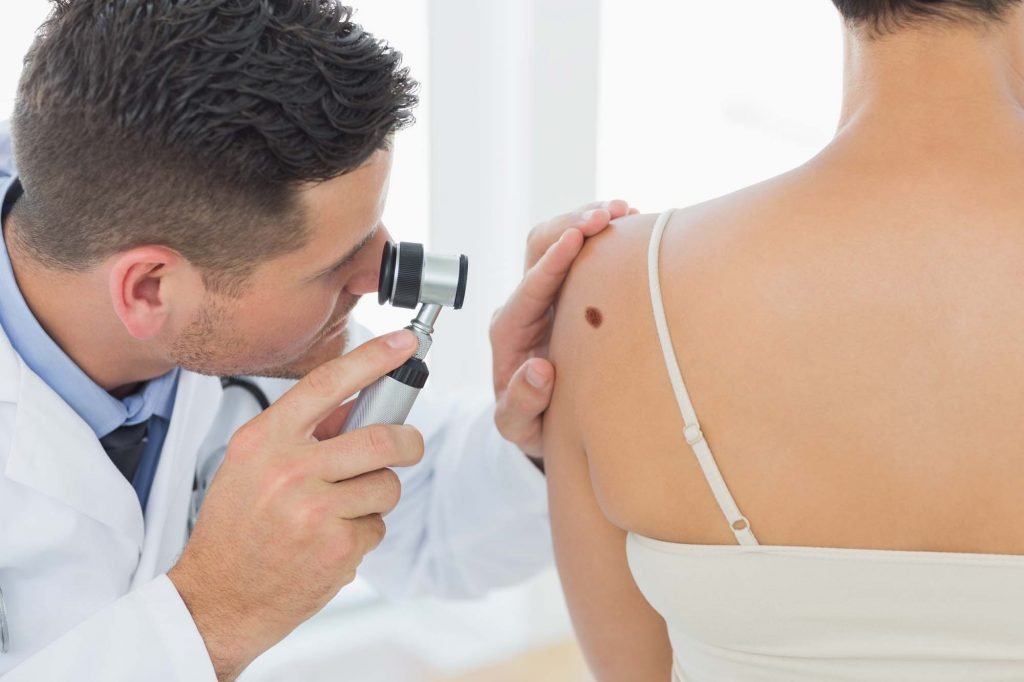
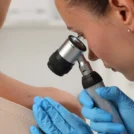
Don’t wait for a spot to look obviously cancerous — many early-stage skin cancers look harmless. If you notice any change at all, book a skin check. Our doctors use advanced dermoscopy to examine lesions in detail and identify cancers invisible to the naked eye.